
Full Mouth Dental Implant in Hyderabad
What is Full Mouth Dental Implant ?
Who is a ideal candidate for Full Mouth Dental Implants?
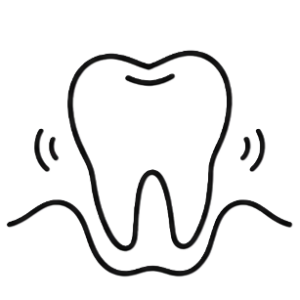
Your Teeth Are Loose And Moving
Teeth that shift when you bite or touch them signal advanced gum and bone disease. Mobility rarely reverses but the right plan can replace what's failing before more bone is lost.
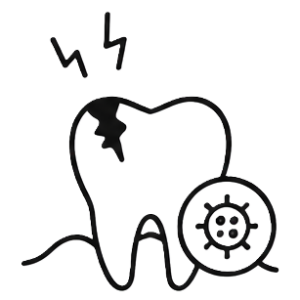
You are In Pain From Deeply Infected Teeth
When infection has spread through multiple teeth, patch-by-patch repair becomes more painful and expensive than an honest rebuild and every month of infection dissolves more of the bone we'll need later.
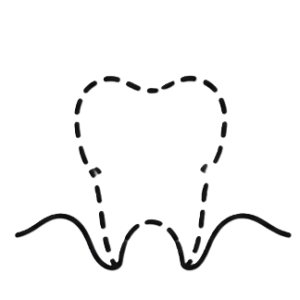
You've Already Lost Most Or All Of Your Teeth
Whether from decay, gum disease, or age, if the teeth are gone, the question is no longer whether to replace them, but on how strong a foundation.
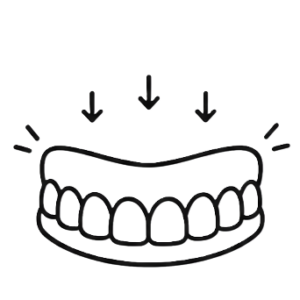
Your Dentures Have Become The Problem
Slipping while eating, sore spots, adhesives, taking them out at night and quietly, underneath, dentures press directly on your jawbone and accelerate its shrinkage every year you wear them.
Why Choose Dr. Spandana's Dentistry ?

MDS Implantologist | AAID Associate Fellow
Implant treatment planned and performed by an experienced implantologist.

High-Quality Implant Systems
We use internationally recognised implant systems selected for long-term function.
Slow
Dentistry
Unhurried appointments with time to understand every option before treatment.
Minimal
Intervention
Healthy teeth and bone are preserved whenever clinically appropriate.

Anxiety-Free
Care
Clear communication and a calm, supportive experience from consultation onwards.
If you are considering full mouth dental implant and evaluating the diverse options.
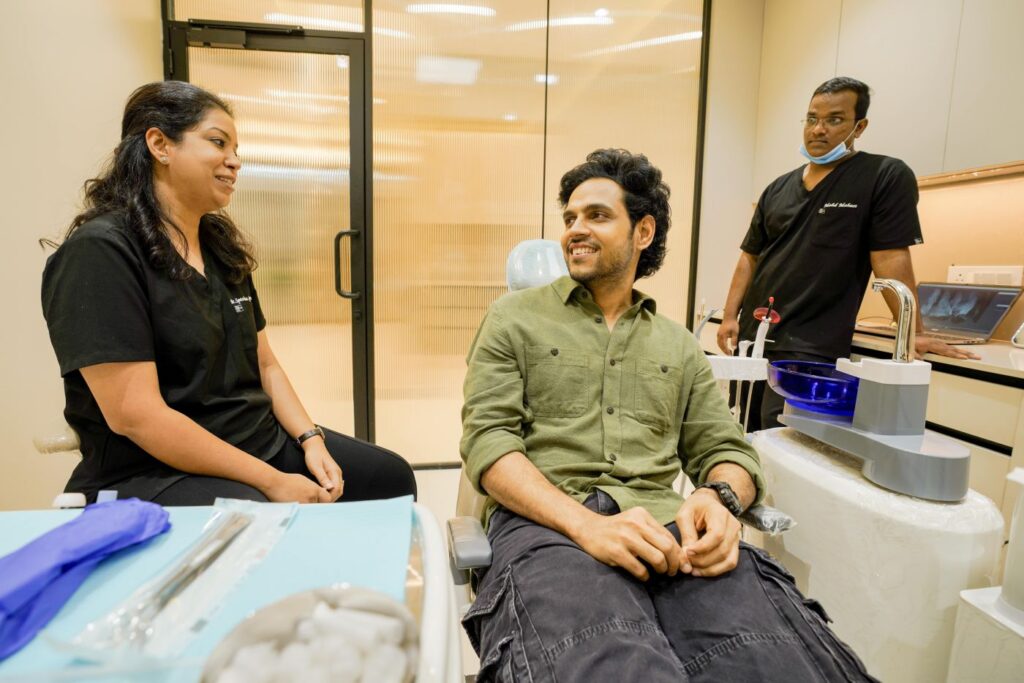
Which Full Mouth Dental Implant options is right for you?
| All-on-4 | All-on-6 | All-on-7/8 | |
|---|---|---|---|
| Implants per arch | 4 | 6 | 7–8 |
| Force per pillar | Highest | Moderate | Lowest — closest to natural |
| Bone required | Least | Moderate | Most (grafting may help) |
| Long-term prognosis | Good when bone-limited | Very good — our usual recommendation | Excellent — textbook ideal |
| Best suited for | Limited bone; medical constraints | Most patients | Good bone, or bone we can rebuild |
Choosing the Right Option
Meet Your Dentist, Dr. Spandana

Dr. Spandana Sripada is one of fewer than 10,000 dentists worldwide to hold an Associate Fellowship from the AAID – American Academy of Implant Dentistry, the global benchmark for implant dentistry credentialing.
Her Training Spans Three Institutions Across Two Continents
- BDS - DY Patil Dental University, Mumbai
- MDS, Periodontology & Implantology - Dr. NTR University of Health Sciences, Hyderabad
- Advanced Educational Program in Implant Dentistry (Full-Time Residency) - DY Patil Dental University, Pune
- AAID Fellow - American Academy of Implant Dentistry, Chicago
Let us build your smile back.
Sit with Dr.Spandana, and make a informed decision.
Cost of Full Mouth Rehabilitation
- Full mouth dental implant treatment - at Dr. Spandana's Dentistry starts from ₹5,00,000 onwards.
- Your final cost depends on factors such as the number of implants required, the condition of your jawbone, whether additional procedures like bone grafting are needed, and the type of final implant-supported teeth recommended. After your consultation, you'll receive a personalised treatment plan with a detailed written cost estimate before making any decision.
Your Full Mouth Rehabilitation Journey
Recovery & Aftercare
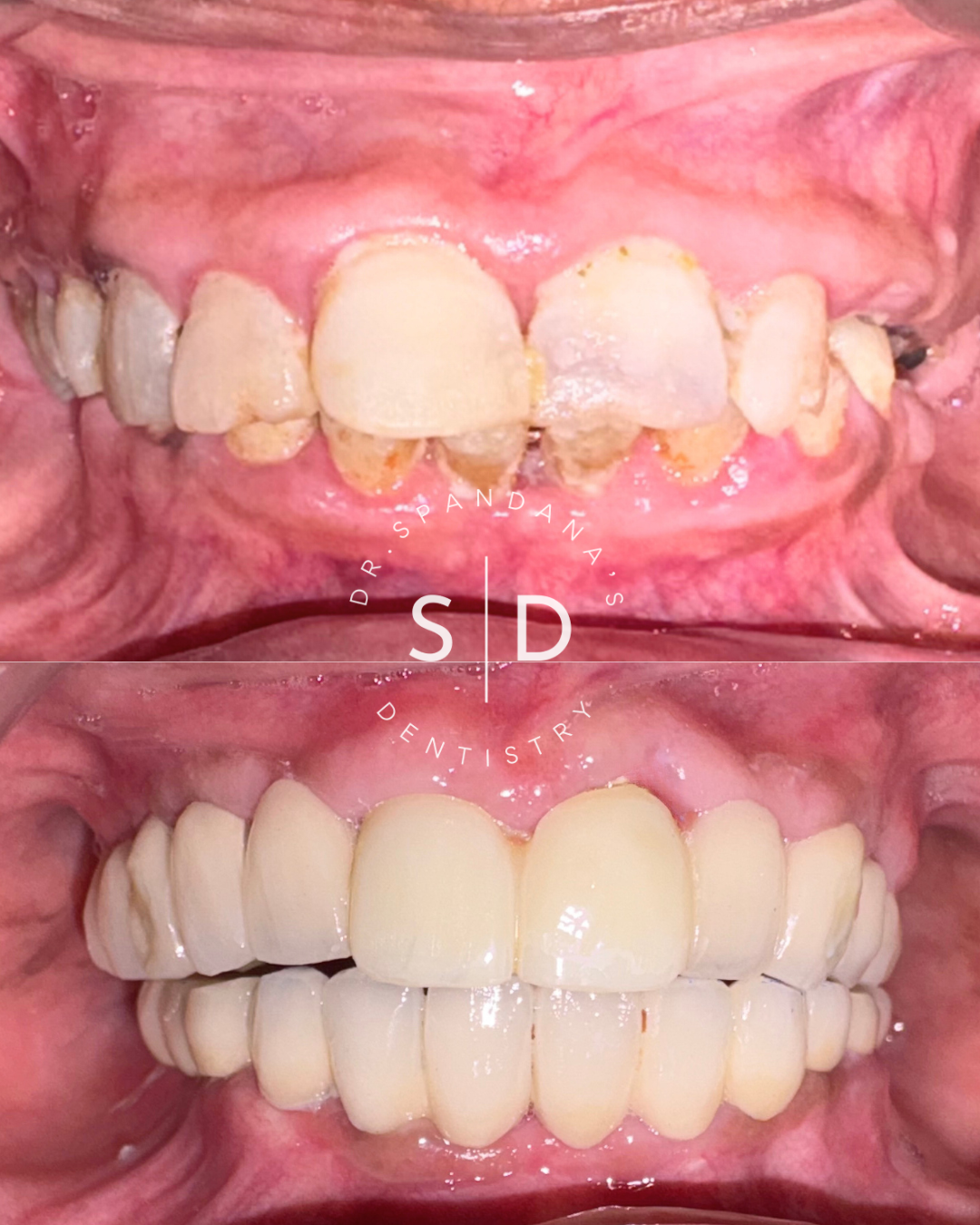
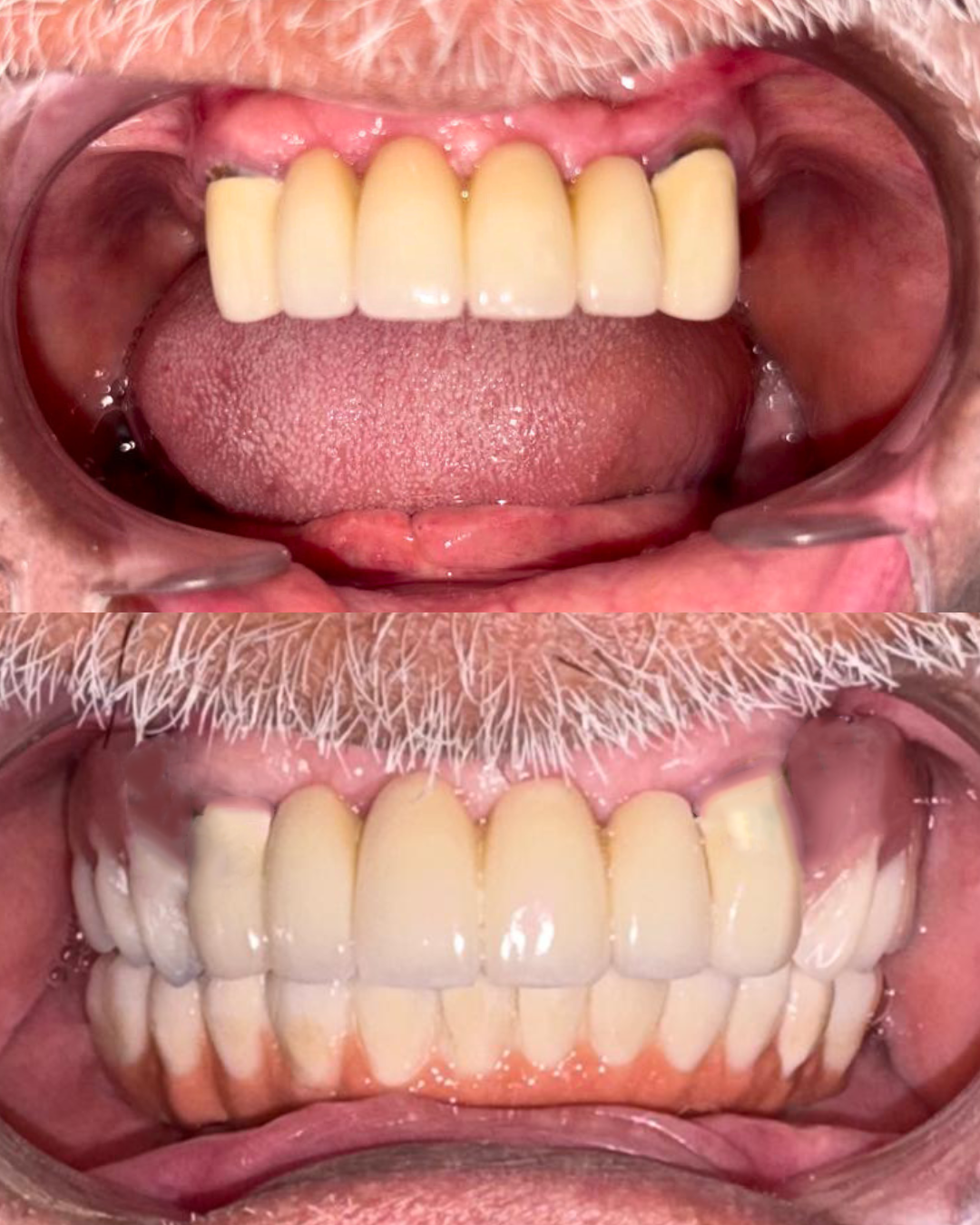
Smile Makeover Results
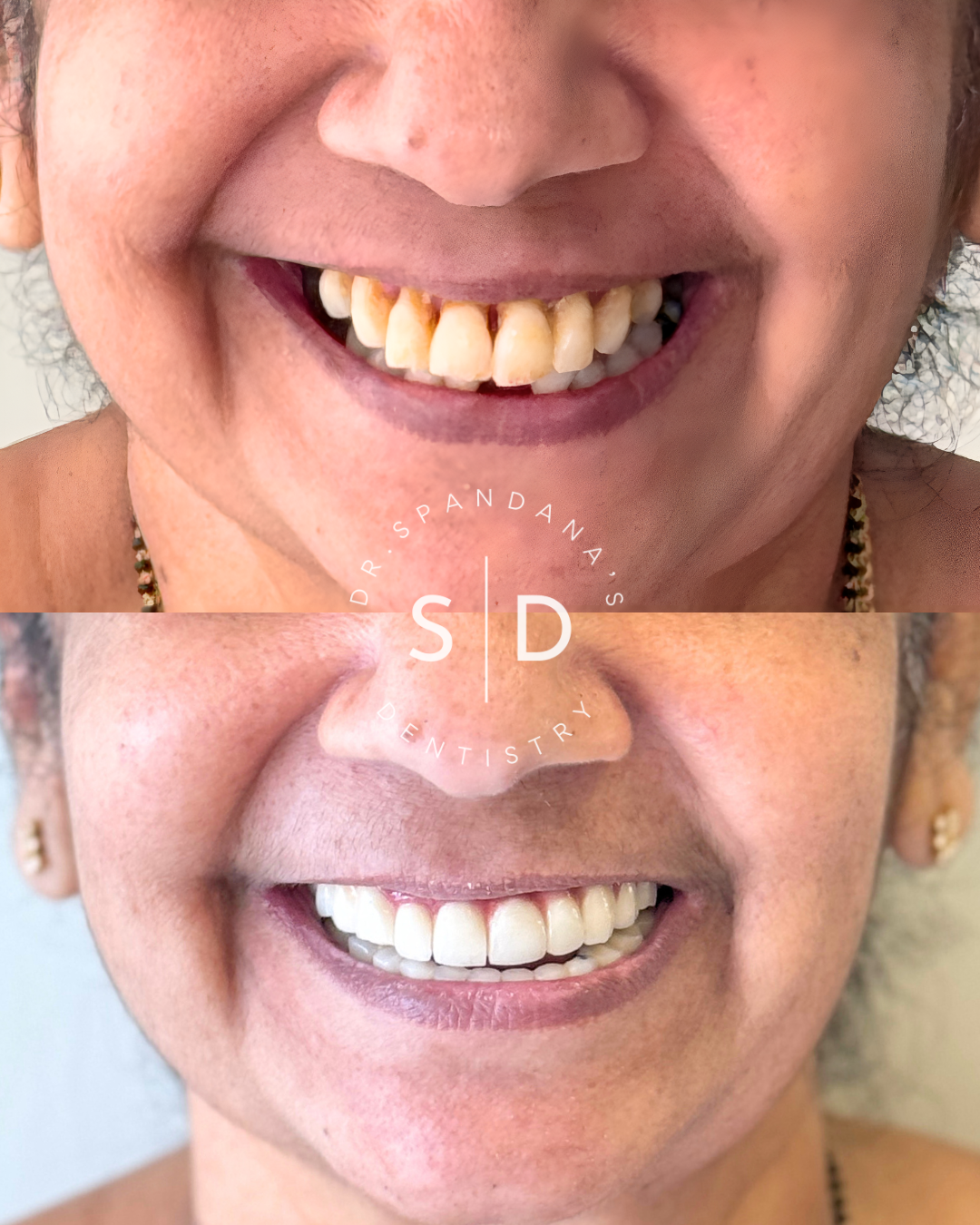


Patient Stories
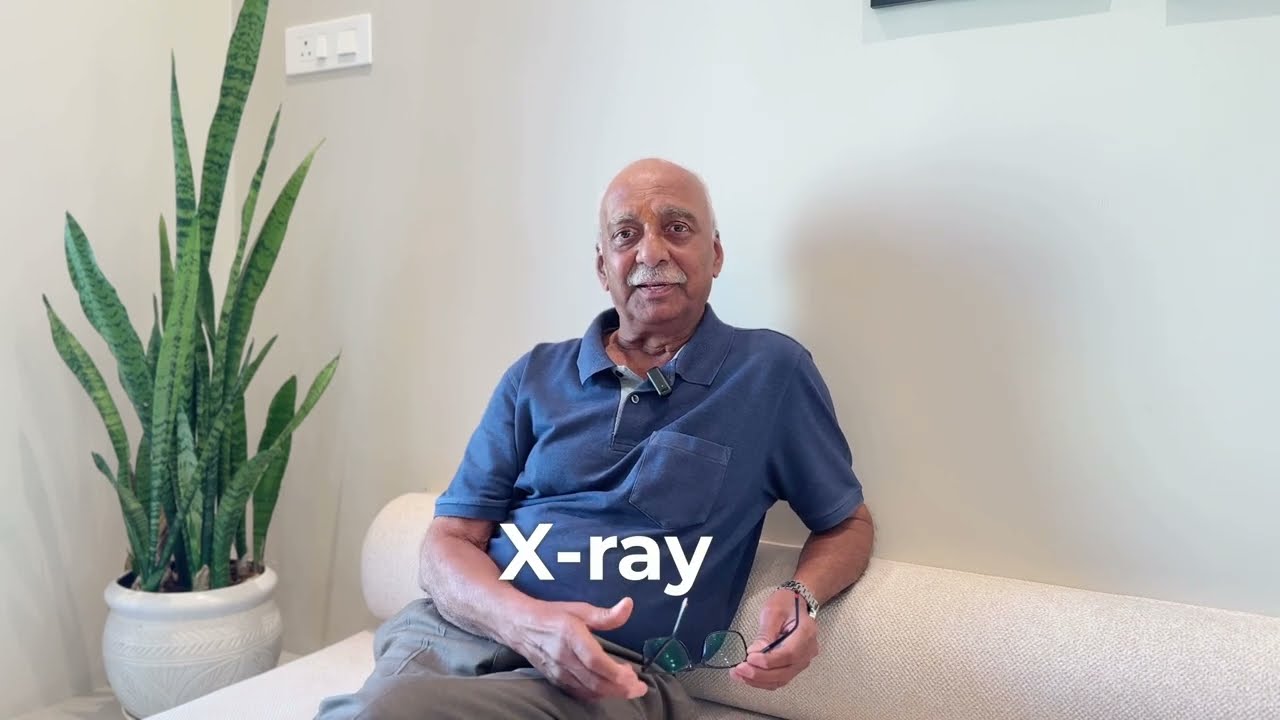
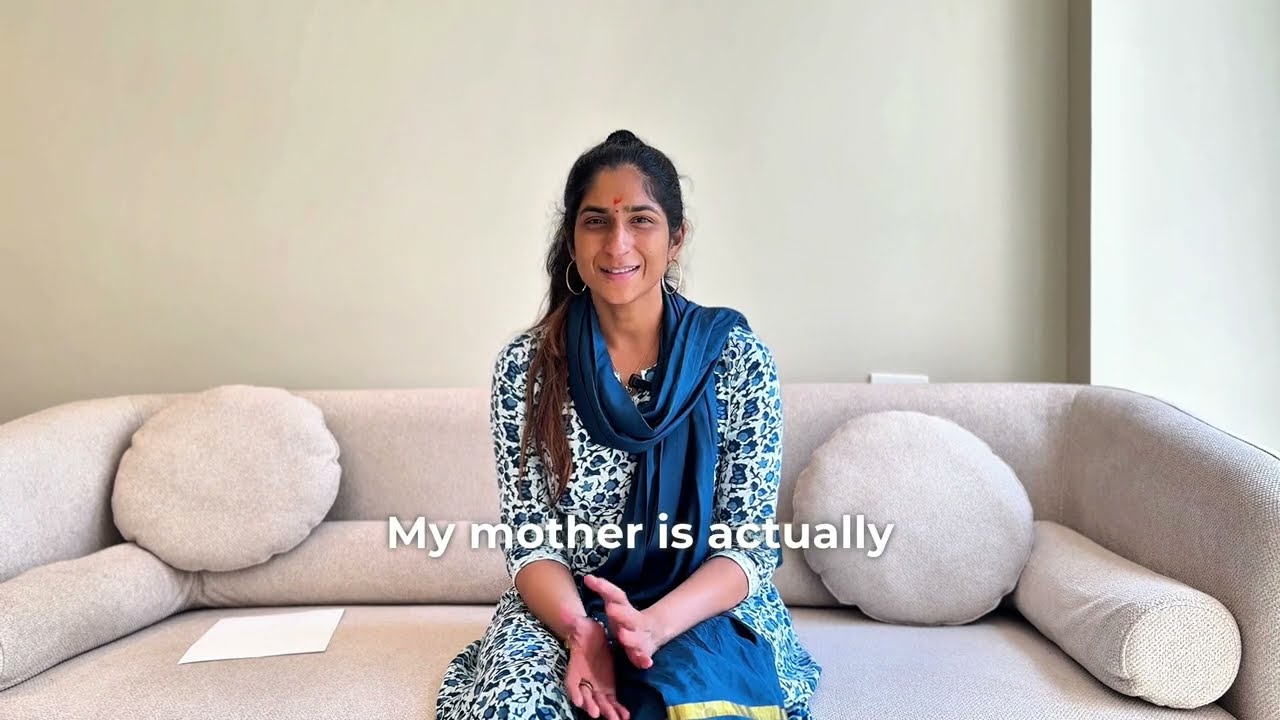
Dr. Spandana's Dentistry - Heartfelt Testimonials
2:04
1:22
0:58
0:24
0:39
1:16
1:56
2:32
Travelling to India for Full Mouth Rehabilitation?
After Travelling to India
Send us your scan and reports before you travel. Dr. Spandana will review them and set out your options on a video call.
FAQs
How many implants do I need to replace all my teeth?
Textbook ideal is 7–8 per arch; the honest answer depends on your bone. We place as many pillars as your bone safely allows, four at minimum, eight where possible, because more pillars means better force distribution and a longer-lasting result. A CBCT scan at your consultation gives your exact number.
Is All-on-4 good or bad?
Neither. It’s situational. All-on-4 is genuinely right when bone is limited or medical factors rule out longer surgery. But when bone allows more implants, we recommend All-on-6 or All-on-8: the chewing load spreads across more pillars and the prognosis improves. We’ll show you the difference on your own scan.
How long does full mouth rehabilitation take?
Typically 3–6 months from placement to final bridge, most of it quiet healing time. In suitable cases you receive fixed temporary teeth on the day of surgery, so you’re never without teeth during healing.
Is the procedure painful?
Placement is done under local anaesthesia, you feel pressure, not pain. Post-surgical soreness is managed with routine medication and settles within days. If dental anxiety is part of your story, tell us: preparing you emotionally before we begin is how we practise, not an extra.
What if I've been told I don't have enough bone?
That’s the case we most want to see. Bone assessment and grafting are Dr. Spandana’s MDS specialisation, and ‘not enough bone’ is often the start of a plan, grafting first, implants after. Rather than the end of one. Bring your reports for a second opinion.
How long will my new teeth last?
Built on enough pillars and cared for with normal hygiene and six-monthly reviews, a full mouth rehabilitation is designed to last decades. Foundation quality is precisely why we argue for more implants where your bone allows.
What is the cost of full mouth dental implants in Hyderabad?
Starting figures by configuration are usually starts with 5 lacs and it depends on bone, system, and grafting. After your consultation you receive the complete figure in writing, no hidden additions, and the price doesn’t move after treatment starts.
Can I get this done in one trip from abroad?
Usually two visits: placement on the first, final bridge after healing on the second, with virtual consultations before and between. Our dental tourism process explains scheduling, stay, and remote follow-up for NRI and international patients.
Full mouth rehabilitation vs dentures which is better?
Dentures rest on your gums, move while eating, and quietly accelerate bone loss underneath. Implant-supported teeth are fixed, function like natural teeth, and preserve your bone. Dentures cost less today; implants cost less per decade of comfortable use.
Do you replace teeth in both jaws at once?
We can, where health and bone allow. Many patients prefer one surgical phase and one recovery. Whether simultaneous or staged is a planning decision we make together, with the trade-offs explained.
How can we help you?