
Root Canal Treatment in Hyderabad
Relieve tooth pain and preserve your natural tooth with carefully planned, comfortable root canal treatment.
Save your natural tooth with Root Canal Treatment in Hyderabad
Signs You May Need a Root Canal Treatment
- Have persistent or severe tooth pain, especially when biting or chewing.
- Feel sensitivity that lingers, with hot or cold discomfort that stays well after the food or drink is gone
- Have pain that wakes you at night, or that returns without an obvious trigger
- Notice swelling or tenderness around the affected tooth, or in the gum and face nearby
- See a small bump or pimple on the gum near a painful tooth, which is often a sign of infection draining
- Notice a tooth turning grey or darker than the teeth beside it
- Have a deep cavity or a cracked tooth that has reached the nerve
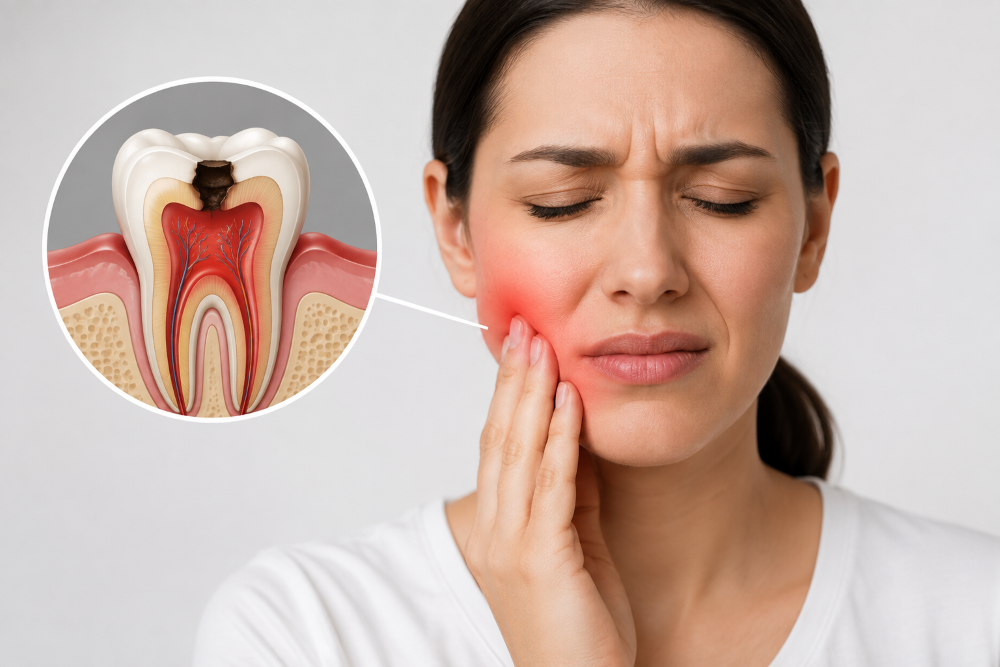
Not every painful tooth needs a root canal, and not every tooth can be predictably saved. A thorough clinical examination and digital X-rays help determine whether root canal treatment is the most appropriate option, whether a more conservative treatment will preserve the tooth, or whether extraction is the more sensible choice. We will explain the reasoning behind whichever we recommend before any treatment begins.
Is Root Canal Treatment Painful?
Most patients find root canal treatment more comfortable than they expected. The pain that brings you to the dentist is often caused by the infection inside the tooth, while root canal treatment is designed to remove the infected tissue and address the source of the problem.
Still unsure whether you need a root canal?
Book a consultation to find out what's causing your tooth pain and whether root canal treatment is the right option for you.
What Happens During Root Canal Treatment?

Numbing the Area
Local anaesthesia is given so the tooth, gums and surrounding structures are completely numb before any work starts. We wait for it to take full effect and test the area before proceeding. If you feel anything during the procedure, we stop and adjust.
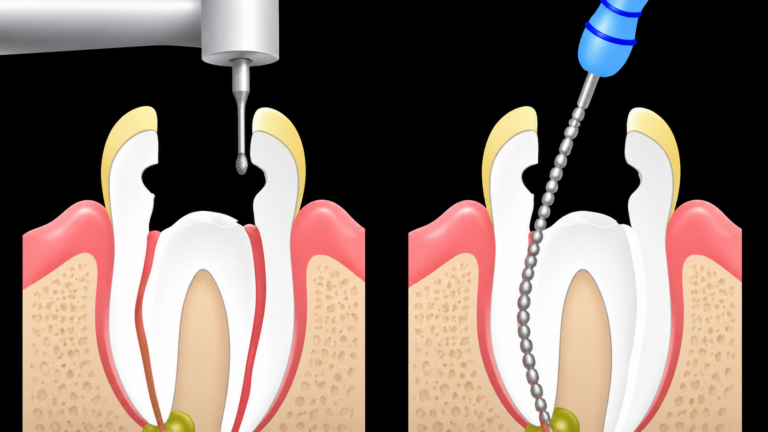
Accessing the Infected Pulp
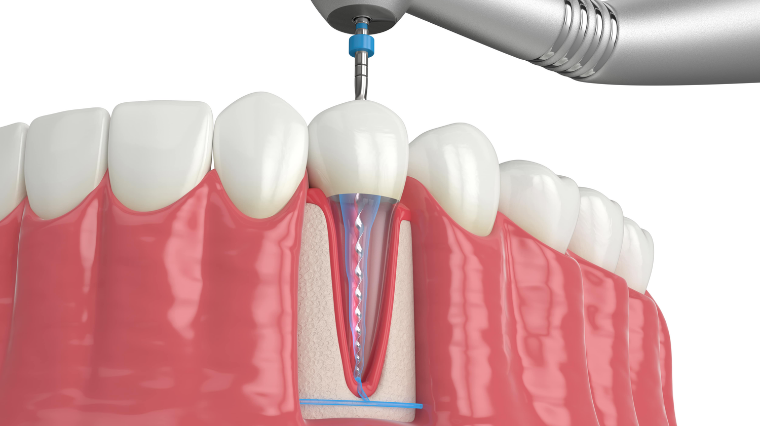
Cleaning and Shaping the Canals
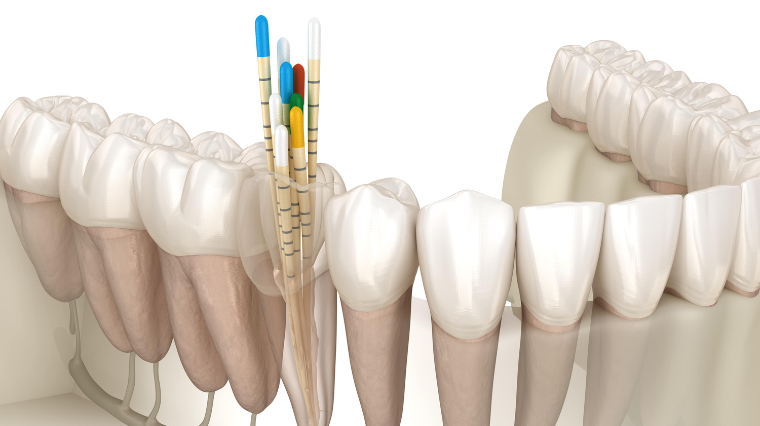
Sealing the Root Canals
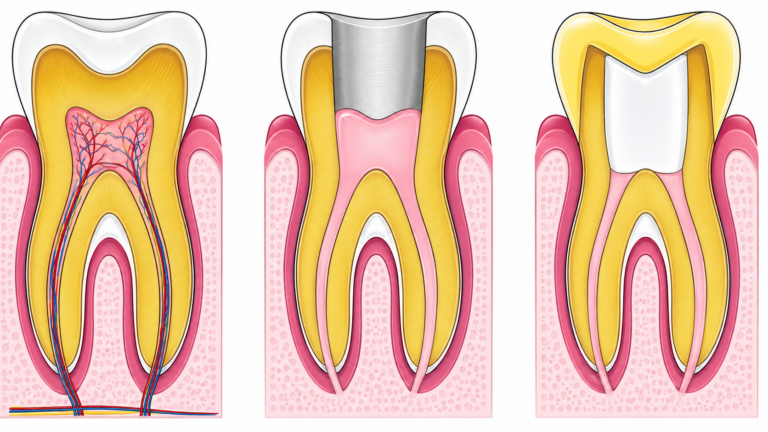
Restoring the Tooth
Recovery After Root Canal Treatment
Most people return to their normal routine the same day or the next. The treated tooth may feel sore or tender for a day or two, particularly when you bite on it, and this settles with the medication we prescribe.
Eat once the numbness has fully worn off, so you do not bite your cheek or tongue without feeling it. Keep to softer food on the day of treatment, and avoid hard or sticky food on the treated side until your final restoration is in place, particularly if the tooth is waiting for a dental crown.
Soreness that fades a little each day is the normal pattern. Contact us if pain increases rather than settles, if swelling appears, or if your bite feels high when you close your teeth together. The last one is easy to miss because it does not feel like a problem, and it is usually a two minute adjustment.
What to expect during a Root Canal Treatment?
1
During the procedure
Your tooth and the surrounding area are numbed using local anaesthesia, so most patients remain comfortable throughout treatment. You may feel pressure or vibration, but you shouldn't feel pain.
2
After the procedure
As the anaesthesia wears off, it's normal to experience mild soreness or tenderness around the treated tooth. This usually settles with the medication recommended by your dentist.
3
The first few days
Most patients notice a significant improvement within a few days and can return to their normal routine shortly after treatment. We'll provide personalised aftercare instructions before you leave the clinic.
Can a Root Canal Be Completed in a Single Sitting?
At Dr. Spandana’s Dentistry, our dental clinic in Khajaguda, we recommend the approach that offers the most predictable long-term outcome, not simply the fastest one. If your tooth can be safely treated in a single visit, we’ll recommend that approach. If an additional appointment is likely to improve the outcome, we’ll explain why and plan your treatment accordingly.
A single visit may not be appropriate when there is active swelling that needs to settle first, when the canal anatomy is unusually complex, or when a previous root canal has failed and requires careful retreatment. Some patients may also prefer two shorter appointments rather than one longer visit, which is equally valid.

Root Canal Treatment Cost in Hyderabad
Root canal treatment at Dr. Spandana’s Dentistry starts from ₹6,000 per tooth. The final cost depends on which tooth is being treated, how far the infection has progressed, and whether the tooth has been treated before. Front teeth usually have fewer canals than premolars and molars, making treatment less complex. If a tooth requires root canal re-treatment, the pricing may vary, as removing the previous filling material and cleaning the canals again takes additional time.
A crown may be recommended for many back teeth after root canal treatment to help protect the tooth from fracture. If a crown is required, the cost will depend on the type of crown and material selected. For many front teeth, a permanent filling may be sufficient instead. We’ll explain which option is appropriate for your tooth during your consultation.
You’ll receive a written, itemised treatment plan and cost estimate before any treatment begins, so you know exactly what to expect.
Why Choose Dr. Spandana's Dentistry For Root Canal Treatment?

Modern
Endodontics
Rotary instruments, apex locators, and digital imaging support precise root canal treatment.
Slow
Dentistry
Unhurried appointments with time to understand every option before treatment.

Single Sitting
Treatment
Many root canals can be completed in one visit, depending on the condition of the tooth.
Minimal
Intervention
We recommend preserving your natural tooth whenever it offers the best long-term outcome.

Anxiety-Free
Care
Clear communication and a calm, supportive experience from consultation onwards.
If a tooth can be saved safely and predictably, we will always explore that first. Book a consultation to understand what’s possible for your tooth.
FAQs
What is RCT?
RCT stands for root canal treatment. It is a procedure that saves a tooth when the soft tissue inside it, called the pulp, becomes infected or inflamed. The infected tissue is removed, the canals inside the root are cleaned and disinfected, and they are then sealed to prevent reinfection. The tooth itself is preserved rather than removed.
When is a root canal needed?
When the pulp inside a tooth is infected or inflamed and cannot heal on its own. This usually follows deep decay, a crack that has reached the nerve, repeated dental work on the same tooth, or an injury. Common signs include lingering pain, prolonged sensitivity to hot or cold, swelling around the tooth, a small bump on the gum, or a tooth turning darker. An examination and digital X-rays confirm whether a root canal is genuinely needed.
Is RCT painful?
Done with proper local anaesthesia, the procedure itself is not painful. You feel pressure, vibration, and the awareness of work being done, but not pain. The pain that brings most patients to us is from the infection, and the root canal is what stops it. Mild soreness for 24 to 48 hours afterwards is normal.
Will I have pain after the root canal?
Mild soreness or tenderness around the treated tooth for a day or two is normal, particularly when biting. It settles with simple pain relief. Pain that worsens after the first few days, or swelling that develops later, is not expected, and you should contact us if either happens.
Does root canal treatment have any side effects?
Mild soreness afterwards is the most common. The tooth becomes more brittle over time, which is why a crown is recommended for most back teeth. Older claims linking root canals to illness elsewhere in the body are not supported by current evidence.
What does root canal treatment cost in Hyderabad?
Root canal treatment at Dr. Spandana’s Dentistry starts from ₹6,000 per tooth. The cost varies with the tooth being treated, since premolars and molars have more canals and more intricate anatomy than front teeth. Re-treatment of a tooth that has had a root canal before starts from ₹10,000, because the previous filling material has to be removed first. Most back teeth also need a crown afterwards, starting from ₹4,000 depending on the material. You will receive a written, itemised estimate before any treatment begins. No hidden additions.
Do I need a cap after root canal treatment?
A cap and a dental crown are the same thing. For most back teeth, yes. A root canal treated tooth becomes more brittle over time because it no longer has a live blood supply, and a crown protects it from fracture. For many front teeth, a permanent filling is enough. We will tell you which applies to your tooth at consultation.
How long does a root canal take?
Usually 60 to 90 minutes, including the time we wait for the anaesthesia to take full effect. More complex cases, such as molars with curved canals or re-treatments, may take longer. We give you an honest estimate at consultation so you can plan your day.
Is a root canal better than extraction?
In most cases, yes. Keeping your natural tooth preserves the bone around it, maintains your bite, and avoids needing a bridge, implant or denture later. But not every tooth can be saved predictably. When a tooth is fractured below the gum line, has lost too much structure to restore, or has severe bone loss around the root, extraction is the more sensible option and we will say so.
How long does a root canal last?
A root canal treated tooth, protected with a crown where one is needed, can last many years. How long depends on how well the canal was cleaned and sealed, the restoration placed afterwards, and your oral hygiene. Some teeth need re-treatment later if a problem develops. We will tell you what to expect for your particular tooth rather than quoting an average.
Can I eat normally after root canal treatment?
Yes, with some care for the first 24 to 48 hours. Wait until the numbness has fully worn off before eating. Avoid biting hard or sticky foods on the treated tooth until any soreness settles. Soft foods on the day of treatment, then back to normal as comfort allows.
Can I work the next day after root canal?
Most patients return to work the next day without difficulty. Mild soreness when biting may continue for a day or two but does not usually interfere with normal activity.
Is root canal treatment safe?
Yes. It is one of the most reliable and widely performed procedures in dentistry. Sterilisation protocols, digital imaging, modern instruments and proper isolation make it both safe and predictable. Older claims linking root canals to systemic disease have been investigated extensively and are not supported by current evidence.