
Teeth Alignment Treatment in Hyderabad: An Honest Look at Your Options
A Healthy Bite Starts With Proper Teeth Alignment
What is Orthodontics ?
Orthodontics is a specialty discipline of dentistry that focuses on the alignment of the teeth and jaws to improve a person’s smile, bite and oral health. At Dr. Spandana’s Dentistry, orthodontic treatment is never about creating a perfectly straight smile alone. It’s about improving function, oral health, and confidence through a treatment plan designed specifically for you.
You might need a Teeth Alignment Treatment when :
- Crowded or crooked teeth that have always bothered you
- Gaps between teeth affected your smile
- A bite that doesn’t close properly (overbite, underbite, crossbite)
- Find it difficult to clean between your teeth despite brushing and flossing
- Jaw discomfort or clicking that may be related to alignment
- Want a healthier more confident smile
Every smile is different. During your consultation, we’ll assess your teeth, bite, and oral health to determine whether teeth alignment treatment is the right option for you.
Not sure which treatment is right for you?
Book a consultation with us to understand your options and choose the treatment that’s right for your smile.
Teeth Alignment Treatment Options

Metal braces
Metal Braces
A reliable and effective treatment for complex teeth alignment and bite correction. While they are more visible than other options, they deliver predictable results and remain one of the most cost-effective orthodontic solutions.
Learn more
Ceramic braces
Ceramic Braces
Ceramic braces offer the same effective treatment as metal braces but with clear or tooth-coloured brackets that blend more naturally with your smile. They are less noticeable but require a little more care during treatment.
Learn more
Lingual braces
Lingual Braces
Lingual braces are placed behind your teeth, making them virtually invisible from the front. Custom-made for each patient, they offer discreet treatment but require a short adjustment period and extra care during cleaning.

Clear Aligners
Clear Aligners
Clear, removable aligners that straighten your teeth discreetly and comfortably. Easy to remove for eating and brushing, they fit seamlessly into everyday life. They work best when worn as recommended and may not be suitable for every case.
Learn more
Metal Braces
A reliable and effective treatment for complex teeth alignment and bite correction. While they are more visible than other options, they deliver predictable results and remain one of the most cost-effective orthodontic solutions.

Ceramic Braces
Ceramic braces offer the same effective treatment as metal braces but with clear or tooth-coloured brackets that blend more naturally with your smile. They are less noticeable but require a little more care during treatment.

Lingual Braces
Lingual braces are placed behind your teeth, making them virtually invisible from the front. Custom-made for each patient, they offer discreet treatment but require a short adjustment period and extra care during cleaning.

Clear Aligners
Clear, removable aligners that straighten your teeth discreetly and comfortably. Easy to remove for eating and brushing, they fit seamlessly into everyday life. They work best when worn as recommended and may not be suitable for every case.
Why Choose Dr. Spandana's Dentistry ?
Your Gums Checked Before Your Teeth
Teeth move through bone. Your gum and bone health is assessed by an MDS Periodontist before any appliance is fitted, and monitored at every review.
Alignment Before Alteration
Where teeth can be moved, we move them. We do not reshape healthy enamel when orthodontics can achieve the same result and keep your natural tooth intact.
Slow
Dentistry
Alignment takes months, not minutes. Reviews are unhurried, and you will always know where you are in the process.

Anxiety-Free
Care
Clear communication and a calm, supportive experience from consultation onwards.
Written Estimates,
No Surprises
You receive a written estimate before treatment begins. No hidden additions later.
Your Orthodontic Treatment Journey
Every Great Smile Begins with the Right Decision. Honest advice and personalised treatment plan.
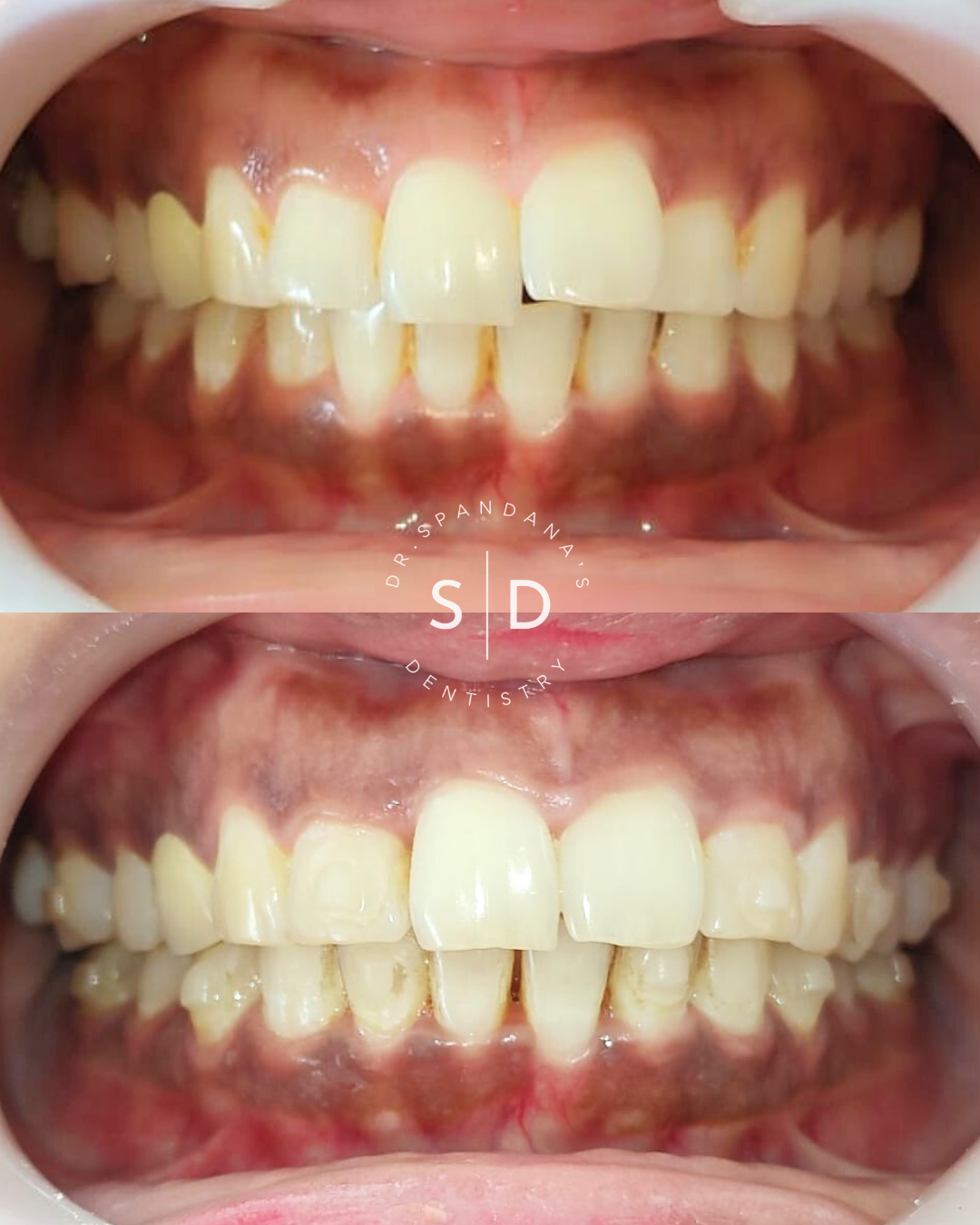
Patient's Orthodontic Transformations


FAQs
When should I see an orthodontic specialist?
Any time crooked, crowded, or gapped teeth bother you, or your bite is not closing properly. There is no age limit. Children should have their first orthodontic check by age seven ,not for treatment, but to catch jaw-growth issues early. For adults, the right time is whenever you decide to invest in the next thirty years of your oral health.
Aligners vs braces: which is better?
There is no single best option. The right choice depends on your case (mild, moderate, or complex), your lifestyle (visibility, discipline), and your budget. We will go through each suitable option with you at the first consultation with honest trade-offs, not just marketing pros.
How much do braces cost in Hyderabad?
Typical ranges per arch: metal braces from ₹35,000. Ceramic braces from ₹45,000. Clear aligners from ₹1,25,000. Lingual braces from ₹2,00,000. Final cost depends on complexity. We provide a written estimate after assessment, with no hidden additions later.
Are clear aligners better than braces?
They are different, not better. Aligners are more comfortable, removable, and nearly invisible, excellent for the right case. Braces can handle more complex bite and rotation problems, and do not require the patient discipline aligners do. For some cases, aligners are the right answer; for others, they would extend treatment unnecessarily.
How long do braces take?
Mild cases finish in 6–12 months. Moderate cases take 12–18 months. Complex cases can take 18–30 months. Regular follow-ups every 4–6 weeks keep treatment on track. We give you an honest estimate of your timeline at the start and we will tell you if it changes during treatment.
What is the best age for braces?
Children should have their first orthodontic check at age seven. That visit is usually not for treatment and it is to detect jaw-growth issues, crowding, or habits like thumb-sucking early. Active orthodontic treatment, when needed, typically begins between ages 9 and 14, when the permanent teeth are mostly through.
Do braces hurt?
There is mild soreness for the first two to three days after braces are placed and after each adjustment. Aligners typically cause less discomfort because the force is gentler and more gradual. After the first week, most patients describe it as awareness, not pain.
Do I need a retainer after braces?
Yes, if you wear your retainer as instructed. After active treatment ends, your teeth will try to drift back toward their original position for several months. A retainer holds them in place while the surrounding bone settles. We will explain the retainer protocol clearly and supply one as part of your treatment.