
Pediatric Dentistry in Hyderabad: A Kids Dentist Who Takes the Time
Early Dental Care Matters
What is Pediatric Dentistry ?

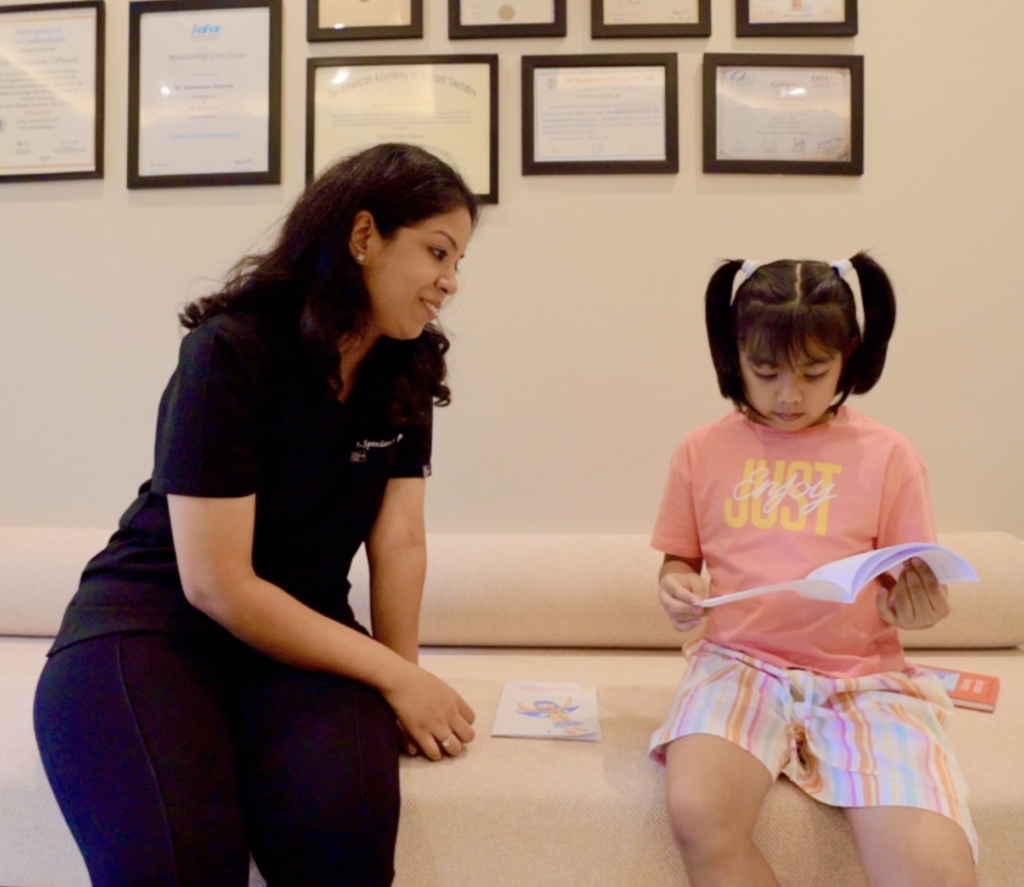
Most adult dental fear was born in childhood, during a single dental visit. The first visit is one of the most important appointments of your child’s life as a dental patient. We treat it that way.”
— Dr. Spandana Sripada
Founder & Practisioner of Slow Dentistry
Things Every Parent Should Know
- Your kid's first Dental Visit should happen by age one. Not at five or six when a problem shows up. Earlier is better, even if there is nothing visibly wrong.
- Baby teeth matter more than parents are told. They hold space for permanent teeth, support speech and chewing, and shape how confidently your child smiles. Losing a baby tooth too early to decay can cause crowding in permanent teeth years later.
- Brushing needs Suprevisions. Until around age seven or eight, your child does not have the motor skills to brush their own teeth thoroughly. They can hold the brush. You should be doing the actual brushing, or at least going over it after them.
- Sugar Frequency Matters. Frequent exposure to sugary drinks and snacks causes more cavities than an occasional sweet eaten in one sitting.
- Most Childhood Cavities Are Preventable. Routine check-ups, sealants on permanent molars, and good brushing habits prevent more dental problems than treatment ever solves.
- Children Learn From You. Children often pick up dental fear from their parents. Staying calm and speaking positively about dental visits helps them feel more confident too.
Why Choose Dr. Spandana's Dentistry ?

Dedicated Paediatric Care
Focused on early diagnosis, healthy development, and treatment matched to your child's age.
We Stop When Your Child Needs Us To
If your child is not ready, we do not push through. We try again another day.

Minimal Intervention
We treat only when it benefits your child. If watching a tooth is better, we will explain why.

You Stay In The Room
Stay beside them for the whole appointment. Children feel more at ease with a parent nearby.
Preventive Dentistry
We aim to keep problems from starting. Sealants, fluoride, and habits that hold.
Not sure where to start?
Ask us a question, or get a free second opinion on treatment recommended for your child.
Children's Dental Care: Starting Before the First Tooth
Dr. Spandana Sripada, on early brushing, sugar habits, which toothpastes to avoid, sealants, and what a first dental visit does for a child years later. More on choosing a toothpaste for your child.
Why parents in Hyderabad choose us?
- Unhurried appointments. We do not run on a fifteen-minute-per-child schedule. A first visit with us is usually 45 minutes to an hour. We are not in a rush.should happen by age one. Not at five or six when a problem shows up. Earlier is better, even if there is nothing visibly wrong.
- Minimal Treatment ,Whenver Possible. We recommend treatment only when it genuinely benefits your child. If monitoring a tooth is the better option, we’ll explain why before recommending any procedure.
- A Calm, Welcoming Environment. Many parents tell us the clinic feels more like a calm, welcoming space than a traditional dental practice. A quieter environment and gentle approach help children feel relaxed from the moment they arrive.
- Parents Are Part of the Visit. ou’re welcome to stay with your child throughout the appointment. We believe children feel more confident when a parent is involved, especially during their first visits.
- Care That Grows With Your Child. From their first tooth through their teenage years and beyond. We’re here to support your family’s oral health with continuity of care from the same trusted team.
What your Child's first visit looks like?
1
First, we sit down and talk.
Before we look at your child’s teeth, we want to understand them. What you are hoping to address. Whether they have been to a dentist before. How they responded if they have. Any habits you are watching (thumb-sucking, pacifier, bottle at bedtime, mouth-breathing). Any sensitivities they have. Any anxieties you carry into the chair yourself, because children pick those up. This conversation matters more than the exam.
This conversation matters more than the exam.
2
Then we introduce your child to the clinic.
If they are very young or very nervous, this can take a while. They might sit on your lap, watch the chair move up and down, hold a mirror, see what the instruments look like.
We do not rush this part.
3
Then we examine, gently.
Only when your child is ready. We check the teeth that are present, look at how they are coming in, check the gums, and gently feel along the jaw. For healthy young children this is brief.
We do not take X-rays at first visits unless there is a specific clinical reason to.
4
Then we talk again.
We tell you what we saw, in plain terms. We discuss next steps, which for most healthy children means simply coming back in six months. If something needs attention, we walk you through the options.
You leave with written notes if there is anything to remember.
5
If your child needs more time, we slow down.
Sometimes the first appointment is just a tour and a chat, with no exam at all. We would rather take three appointments to build trust than one appointment that ends in tears.
Tell us beforehand if you are worried, and we will adjust the visit accordingly.
Our little patients


Their Experience at our clinic
Give Your Child a Positive First Dental Experience
Take the first step towards a lifetime of healthy smiles. Book your child's appointment and let us make every dental visit a positive experience.
FAQs
At what age should my child first see a pediatric dentist?
By your child’s first birthday, or within six months of their first tooth appearing, whichever comes first. For most children, that means somewhere between six and twelve months old. The ideal time is when there is nothing visibly wrong. The earlier they meet a kids dentist in a calm, no-pressure visit, the easier every future visit becomes.
My child is already four or five years old. Is it too late?
Not at all. The ideal first visit is by age one, but the second-best time is now. Many parents bring their child to us for the first time at three, four, or five. The earlier the better, but it is never too late to start a good relationship with dental care.
Do baby teeth really matter if they will fall out anyway?
Yes. Baby teeth hold space for permanent teeth, support speech and chewing, and affect how confidently your child smiles. Losing a baby tooth too early to decay can cause crowding in permanent teeth years later. Restoring a decayed baby tooth is often the right decision, not a wasted treatment.
My child is scared of the dentist. What should I do?
Tell us beforehand. We adjust our approach completely for an anxious child. Sometimes the first appointment is just a tour and a chat, with no exam at all. Avoid using the dentist as a threat at home (“if you don’t brush, you’ll have to go to the dentist”), and try not to share your own dental fears in front of your child. They pick up on it.
How often should children see a dentist?
Every six months for routine check-ups. Some children with higher cavity risk may need to come more often. We will tell you honestly which category your child falls into.
Are dental X-rays safe for children?
Modern dental X-rays use very low doses of radiation, and we only take them when there is a clear clinical reason. We use protective coverings and follow current safety guidelines. We will never take an X-ray on your child unless we genuinely need it to make a good decision.
What if my child will not sit in the chair?
This is completely normal at a first visit, especially for very young children. We are patient. We let them sit on your lap if they need to. We do not force any child into the chair. Building comfort matters more to us than completing the exam in one go.
What is the difference between a pediatric dentist and a regular dentist?
Pediatric dentistry focuses on the dental health of children specifically, including how their teeth, jaws, and behaviour develop. The clinical knowledge differs in some areas, and the approach to working with a child differs significantly. At our clinic, children are seen with the same Slow Dentistry approach we use with adults: unhurried, gentle, and built around emotional comfort first.
Do you do sedation for very anxious or very young children?
Most pediatric dental work can be completed comfortably without sedation. We use behavioural techniques, environmental adjustments, and our pace to handle most anxious children. For specific situations where sedation is clinically appropriate, we discuss it carefully with you in advance and make sure you understand the options fully.
Are you a good fit for children with special needs?
Yes, with planning. Children with sensory sensitivities, autism, or other specific needs benefit even more from an unhurried, calm dental approach. Tell us about your child’s needs when you book the appointment, and we will tailor the visit accordingly. Sometimes that means coming at a quieter time of day, or doing a pre-visit at the clinic before any examination.