

Root Canal Treatment in Hyderabad
Relieve tooth pain and save your natural tooth with carefully planned, comfortable treatment.
Is Root Canal Treamtent painful?
At Dr. Spandana's Dentistry, treatment is carefully planned around your comfort. We explain each step before we begin, work at a pace that suits your needs, and focus on preserving your natural tooth whenever possible.
Can a Root Canal Be Completed in a Single Visit?
At Dr. Spandana's Dentistry, we recommend the treatment approach that offers the most predictable long-term outcom, not simply the fastest one. If your tooth can be treated safely in a single visit, we'll do so. If an additional visit is likely to improve the result, we'll explain why and plan your treatment accordingly.
Why Choose Dr.Spandana's Dentistry
- Save the tooth whenever possible. We recommend a root canal only when it is the best way to preserve your natural tooth.
- Single-sitting treatment. Many suitable cases can be completed in a single visit using modern endodontic techniques.
- Modern technology. Digital X-rays, rotary endodontic instruments, apex locators, and advanced irrigation protocols help make root canal treatment more precise, predictable, and comfortable.
- Anxiety-conscious care. We take the time to explain every step, answer your questions, and help you feel comfortable throughout your treatment.
- Experienced clinical care. Dr. Spandana is an MDS in Periodontology & Implantology, an Associate Fellow of the American Academy of Implant Dentistry (AAID), a Fellow of the Indian Society of Oral Implantologists (ISOI), with over 15+ years of clinical experience.
When should one consider Root Canal Treatment?
Root canal treatment is recommended when the soft tissue (pulp) inside a tooth becomes infected or inflamed and cannot heal on its own. Treating the infection early can often save your natural tooth and prevent the need for extraction.
You may need a root canal if you:
- Have persistent or severe tooth pain.
- Experience prolonged sensitivity to hot or cold.
- Notice swelling or tenderness around the affected tooth.
- Have a deep cavity or a cracked tooth that has reached the nerve.
- Develop a dental abscess or recurring gum swelling near a tooth.
Not every toothache requires a root canal. A thorough clinical examination and digital X-rays help determine whether root canal treatment is the most appropriate option or if a more conservative treatment can preserve your natural tooth.
— Dr. Spandana Sripada
What Happens During a Root Canal?
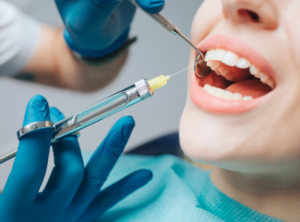
Numb the Area
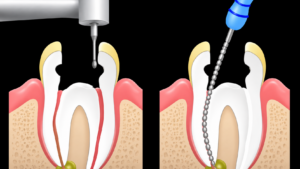
Access the Infected Pulp
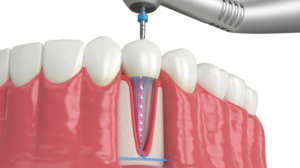
Clean and Shape the Canal
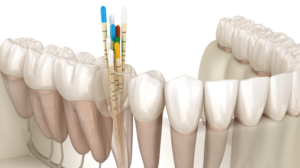
Seal the Canal
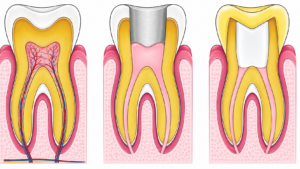
Restore the Tooth
What to Expect
- During the procedure: Your tooth and the surrounding area are numbed using local anaesthesia, so most patients remain comfortable throughout the treatment. You may feel pressure, vibration, or water used to clean the tooth, but you shouldn't feel pain.
- After the Procedure : As the anaesthesia wears off over the next few hours, it's normal to experience mild soreness or tenderness around the treated tooth. This is usually temporary and can often be managed with the medications recommended by your dentist.
- The first few days: Most patients notice a significant improvement in their symptoms within a few days and can return to their normal routine shortly after treatment. We'll provide personalised aftercare instructions to support a smooth recovery.
Feeling Nervous About Root Canal Treatment?
Dental anxiety is common, and we understand that many patients feel apprehensive about root canal treatment. At Dr. Spandana's Dentistry, we take an unhurried approach, explain every step before we begin, and work at a pace that helps you feel comfortable and in control. If you need extra time, short breaks during the procedure, or have concerns you'd like to discuss beforehand, we'll be happy to accommodate them wherever possible.

- BDS – DY Patil Dental University, Mumbai
- MDS, Periodontology & Implantology – Dr. NTR University of Health Sciences, Hyderabad
- Advanced Educational Program in Implant Dentistry (Full-Time Residency) – DY Patil Dental University, Pune
- AAID Fellow – American Academy of Implant Dentistry, Chicago
Across more than 15 years of clinical practice in Mumbai, Pune, Bangalore, and Hyderabad, Dr. Spandana has cared for thousands of patients with a philosophy rooted in honesty, evidence-based dentistry, and transparent communication.
Don’t Let Fear Keep You in Pain
If a tooth can be saved safely and predictably, we’ll always explore the option first.
What happens if you Dealy Root Canal Treatment
- Worsening infection: that reaches the surrounding bone and tissues..
- Persistent or recurring tooth pain, especially while chewing or with hot and cold foods.
- Dental abscess, Mwhich can cause swelling, pus discharge, and severe discomfort.
- Cracks or fractures in the weakened tooth, making it harder to save..
- Tooth extraction if the damage becomes too extensive for a root canal to be successful.
The earlier a root canal is performed, the better the chances of preserving your natural tooth and avoiding more complex treatment later.
Root Canal Treatment Cost in Hyderabad
Benefits of Root Canal Treatment
- Preserves your natural tooth by treating the infection instead of removing the tooth.
- Relieves pain and discomfort caused by infection or inflammation inside the tooth.
- Restores normal chewing and biting function, allowing you to eat comfortably again.
- Prevents the infection from progressing to the surrounding bone and neighbouring teeth.
- Maintains your natural smile and bite, reducing the need for tooth replacement options such as bridges or dental implants.
- Supports long-term oral health by preserving healthy surrounding teeth and jawbone wherever possible.
Whenever possible, preserving your natural tooth is usually the best long-term option. Root canal treatment allows us to eliminate infection while helping you keep the tooth you've had all your life.
If you’re in pain, don’t wait. Root canal treatment is the right solution for your tooth.
FAQs
What does single-sitting root canal cost in Hyderabad?
Root canal treatment cost from ₹6,000 per tooth. The cost varies with the tooth being treated: premolars and molars have more canals and more intricate anatomy, so they sit higher than front teeth.
Re-treatment of a previously root-canalled tooth costs ₹10,000 onwards, as removing old filling material makes the work more complex. Most root-canalled teeth also need a crown afterwards to protect them; crown options and their costs are discussed during your consultation.
You will receive a written, itemised quote before any treatment begins. No hidden additions.
Is single-sitting root canal painful?
No. Done with proper local anaesthesia, the procedure itself is not painful. You feel pressure, vibration, and the awareness of work being done, but you do not feel pain. The pain that brings most patients to our clinic is from the infection before treatment, and the root canal is what stops it. Mild soreness for 24 to 48 hours afterwards is common and manageable with simple pain relief.
How long does a single-sitting root canal take?
Typically 60 to 90 minutes from start to finish, including the anaesthesia waiting time. More complex cases (molars with curved canals, re-treatments) may take up to 2 hours. We give you an honest time estimate at consultation so you can plan your day. We do not rush root canal treatment.
Do I need a crown after root canal treatment?
For most posterior teeth (premolars and molars), yes. A root-canalled tooth becomes brittle over time because it no longer has live blood supply. A crown protects it from fracture. For most front teeth, a permanent filling is usually sufficient. We tell you honestly which your tooth needs.
How long does a root canal last?
Done well, a root canal-treated tooth (with a crown if needed) typically lasts 15 to 20 years or longer, often for the rest of your life. Long-term success depends on the quality of the initial treatment, the crown placed afterwards, and your oral hygiene. Some root canals last 30+ years; some need re-treatment after 5 to 10 years if a problem develops.
Is single-sitting root canal as effective as multi-visit treatment?
Yes. Modern research shows equivalent success rates for single-sitting and multi-visit root canal treatment in suitable cases. Some studies suggest slightly better outcomes with single-sitting because the canal is sealed in one controlled procedure rather than left temporarily between visits. The key is whether your case is suitable for single-sitting, which we assess at consultation.
When is single-sitting root canal not recommended?
Single-sitting is not the right choice when there is significant active swelling that needs antibiotic treatment first, when the tooth has unusually complex canal anatomy, when previous failed root canal treatment requires careful re-cleaning, or when the patient cannot comfortably sit for a longer single appointment. In these cases we recommend staging the treatment over two visits.
Can I eat normally after root canal treatment?
Yes, with simple precautions for the first 24 to 48 hours. Avoid biting hard or sticky foods on the treated tooth until any soreness settles. Soft foods (rice, dal, soups, yogurt) on the day of treatment, then gradually return to normal eating as comfort allows. Once a permanent crown is placed (if needed), the tooth functions normally for biting and chewing.
Can I work the next day after root canal?
Yes, most patients return to work the next day without difficulty. Mild soreness on biting may continue for 24 to 48 hours but does not usually interfere with normal activity. If your job involves heavy physical exertion or public speaking and you are concerned about comfort, plan the procedure for a Friday or before a rest day.
Is root canal treatment safe?
Yes. Root canal treatment is one of the most reliable and widely performed procedures in dentistry. At our clinic, advanced sterilisation, digital imaging, modern instruments, and proper isolation make it both safe and predictable. Long-standing concerns linking root canals to systemic disease have been thoroughly investigated and are not supported by modern evidence.
Does my health insurance cover root canal treatment?
Many Indian health insurance policies cover root canal treatment under dental procedures, but coverage varies significantly by policy and provider. We recommend confirming directly with your insurer before treatment. We provide all documentation needed for insurance claims.
Do you offer EMI or financing for root canal treatment?
For higher-value treatment plans (multiple root canals, complex cases, premium crown options), we accept payments in instalments and work with third-party medical financing partners for structured EMI. Discuss this openly during your consultation. Root canal treatment costs should not be the barrier to saving your tooth.
How can we help you?