

— BLEEDING GUMS —
Bleeding Gums: Causes, Treatment & When to See a Dentist (2026 Guide)
By Dr. Spandana Sripada
MDS (Periodontology & Implantology), AAID Associate Fellow
8 min read
By: Dr. Spandana Sripada, MDS (Periodontology & Implantology)
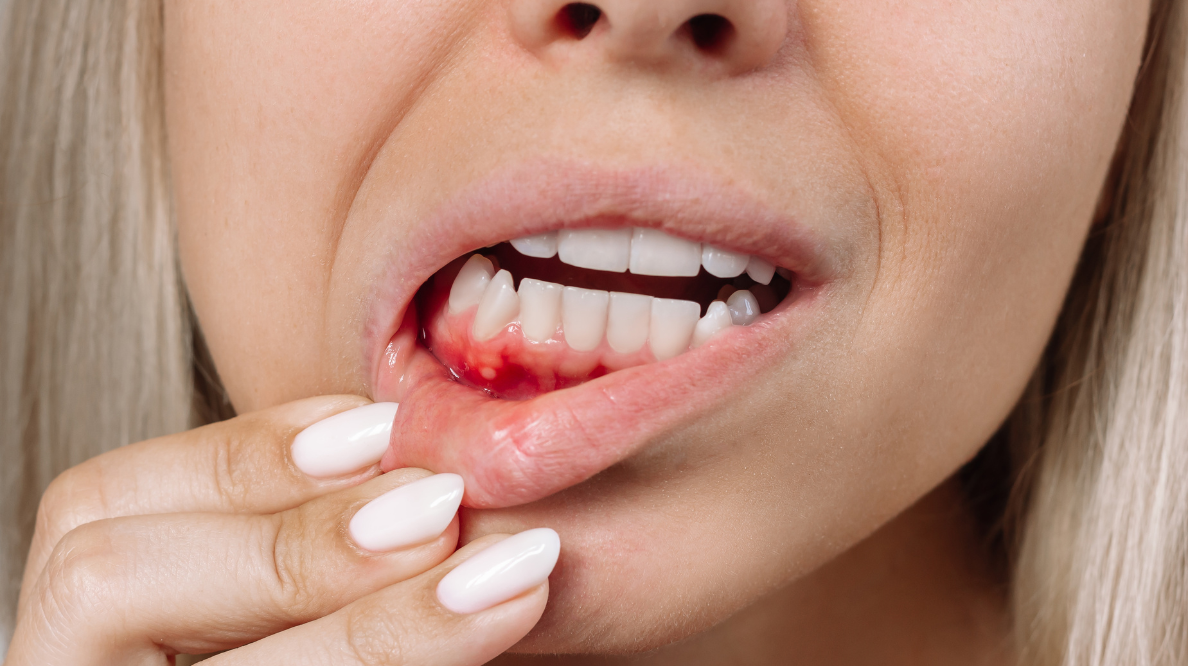
Bleeding gums are most often caused by gingivitis, the early, reversible stage of gum disease riggered by plaque bacteria. Other primary causes include vitamin C or D deficiencies hormonal shifts during pregnancy, and aggressive brushing. While home care helps, professional ultrasonic scaling is the only way to remove hardened tartar. If bleeding lasts more than two weeks or is accompanied by bad breath, it requires a professional evaluation to prevent permanent bone loss.
Why are my gums bleeding? The Four Real Causes
- Plaque & Tartar (Calculus): The #1 cause. Plaque is a bacterial film that hardens into tartar within 72 hours. Brushing cannot remove tartar; only a dentist can.
- Vitamin Deficiencies: In India, low levels of Vitamin C, K, and Vitamin D3 are clinically linked to gum sensitivity and “easy bleeding.”
- Pregnancy Gingivitis: Hormonal surges increase blood flow to gum tissues, making them hyper-sensitive to even small amounts of plaque.
- Traumatic Brushing: Using a “Hard” or “Medium” toothbrush can actually scrub away your protective gum attachment.
'"In my 10 years of practice, I’ve found that bleeding gums are the most ignored warning sign. Patients often tell me, ‘My gums always bleed, it’s normal.’ It is not. Healthy gums do not bleed. The good news? Caught early, gingivitis is 100% reversible."
— Dr Spandana’s Expert Note
How to stop bleeding gums fast (And what won’t work)
When patients ask, “What is the fastest way to stop bleeding gums?” they usually mean at home.
- The Saltwater Rinse: A warm saltwater rinse is an excellent natural antiseptic that reduces inflammation temporarily.
- The “Colgate” Myth: While anti-gingivitis toothpastes help, Colgate or any toothpaste cannot stop bleeding if the cause is tartar buildup under the gumline.
- Will it heal on its own? No. Unlike a skin scratch, the mouth is a bacterial environment. Without removing the bacterial source, the infection will only move deeper toward the bone.
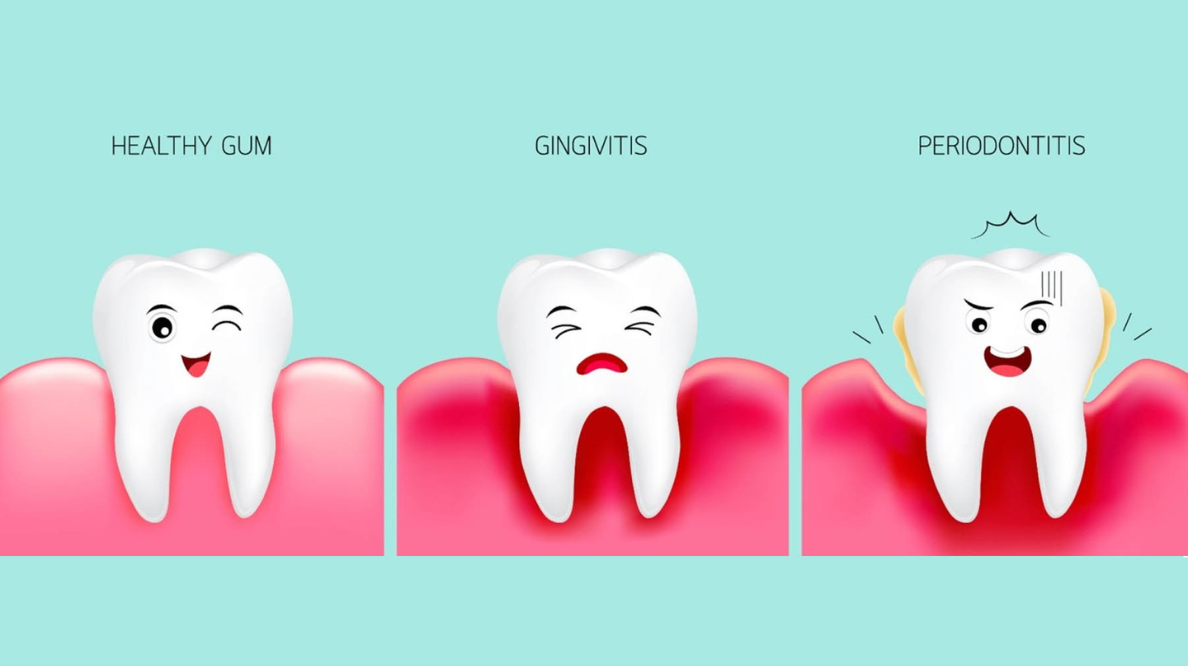
The Four Stages of Gum Disease: A Visual Guide
| Stage | What It Looks Like | Is it Curable? | Treatment |
|---|---|---|---|
| Stage 1: Gingivitis | Red, swollen, bleeds when brushing. | Yes (100%) | Professional Cleaning (Scaling) |
| Stage 2: Early Periodontitis | Gums start to pull away; small "pockets" form. | Manageable | Deep Cleaning (Root Planing) |
| Stage 3: Moderate | Noticeable bone loss; teeth may shift. | No (Irreversible) | Laser therapy / Gum Surgery |
| Stage 4: Advanced | Loose teeth; painful chewing; abscesses. | No | Surgery or Extractions |
Vitamin Deficiency and Bleeding Gums: The Hidden Link
- Vitamin C: Critical for collagen synthesis. Without it, your gums literally lose their structural integrity.
- Vitamin D: New research shows that Vitamin D acts as an anti-inflammatory. Low D levels make you more susceptible to “Stage 1 gum disease.”
- Vitamin K: Necessary for blood clotting.
Is Gum Disease Contagious? (The "Kissing" Question)
This is a common but rarely asked question: “Can I kiss my partner if I have gingivitis?”
The Answer: Yes, gum disease bacteria (P. gingivalis) can be transferred through saliva. If one partner has severe periodontitis, the other is at a higher risk for gum inflammation. Good oral hygiene is a “team sport” for couples.
The best toothpaste and mouthwash for bleeding gums - an honest take
Most “gum care” toothpaste advertising is marketing. The actual evidence supports:
- Toothpaste with stannous fluoride (not just sodium fluoride). Stannous fluoride has antibacterial properties that reduce plaque-related inflammation. Crest Pro-Health Advanced and Sensodyne Sensitivity & Gum are widely available examples.
- Toothpaste containing chlorhexidine only for short-term use under dental guidance, as long-term use can stain teeth.
- Antiseptic mouthwash with chlorhexidine 0.12% or 0.2% – short-term, prescribed for active gingivitis, not for daily long-term use.
What does not work as well as the marketing claims: most “natural herbal” toothpastes for active gum disease, charcoal toothpaste, and any “whitening” formula for inflamed gums.
The single biggest factor is not which toothpaste you use. It is your technique, your consistency, and whether the underlying plaque has been professionally cleaned away. A premium toothpaste cannot undo three years of missed cleanings. A basic fluoride toothpaste, used correctly twice a day with proper flossing, can hold healthy gums beautifully.
When home remedies aren't enough, you will need professional treatment options
1. Comprehensive examination
Including measurement of gum pocket depths, X-rays to assess bone level, and an honest discussion of contributing factors (smoking, diet, medications, medical conditions).
2. Professional cleaning (scaling)
3. Scaling and root planing (deep cleaning)
4. Periodontal surgery
only for advanced cases. Modern techniques are far less invasive than they were even a decade ago.
5. Maintenance cleanings every 6 months
How we treat bleeding gums at Dr. Spandana’s Dentistry
- Diagnostic Scans: We show you exactly where the plaque is hiding.
- Ultrasonic Scaling: A painless, high-tech way to vibrate tartar off the teeth without scraping.
- The 6-Month Mandate: We recommend a professional cleaning every 6 months (or at least once a year) to ensure Stage 1 never turns into Stage 2.
A Note from
Dr. Spandana
If you've been Googling "scared of the dentist" at midnight, hoping it'll just go away I understand. Most of the patients I see arrived at our clinic the same way.
I want you to know two things.
First: dental anxiety is not a weakness, and it is not something to be embarrassed about. It is a perfectly reasonable response to past experiences your body has not forgotten. The patients I worry about are not the ones who tell me they are scared. They are the ones who ignore the problem for years because the fear of the chair is bigger than the fear of what's happening to their teeth. By the time they finally come in, what could have been a single visit has become months of treatment.
Second: visiting a dentist for this does not have to be the experience you may be picturing. At our clinic, we practise what we call Slow Dentistry — which means we don't rush you, we don't surprise you, and we don't begin any treatment until you fully understand what's happening and why. Your first appointment with us is a conversation, not a procedure. We will listen. We will examine. We will explain. And only then, together, will we decide what comes next.
If you've been avoiding the dentist because of a past bad experience, dental anxiety, or fear of judgment for letting things slide — please know that this practice is built specifically for people like you. The room is calm. The pace is gentle. There is no lecture. There is no shame. There is only a plan to get your oral health, and your peace of mind, back to where they should be.
Bleeding gums are reversible at Stage 1. They become harder to fix at every stage that follows. Whatever stage you are in right now, the right time to act is today.
Stop the Doubt. Start the Healing.
Book a Gum Health Consultation with Dr. Spandana
45 minutes. Honest assessment. No pressure.
Mon–Sat, 11:00 AM – 8:00 PM | Sankalpam, Prashanthi Hills, Khajaguda, Hyderabad